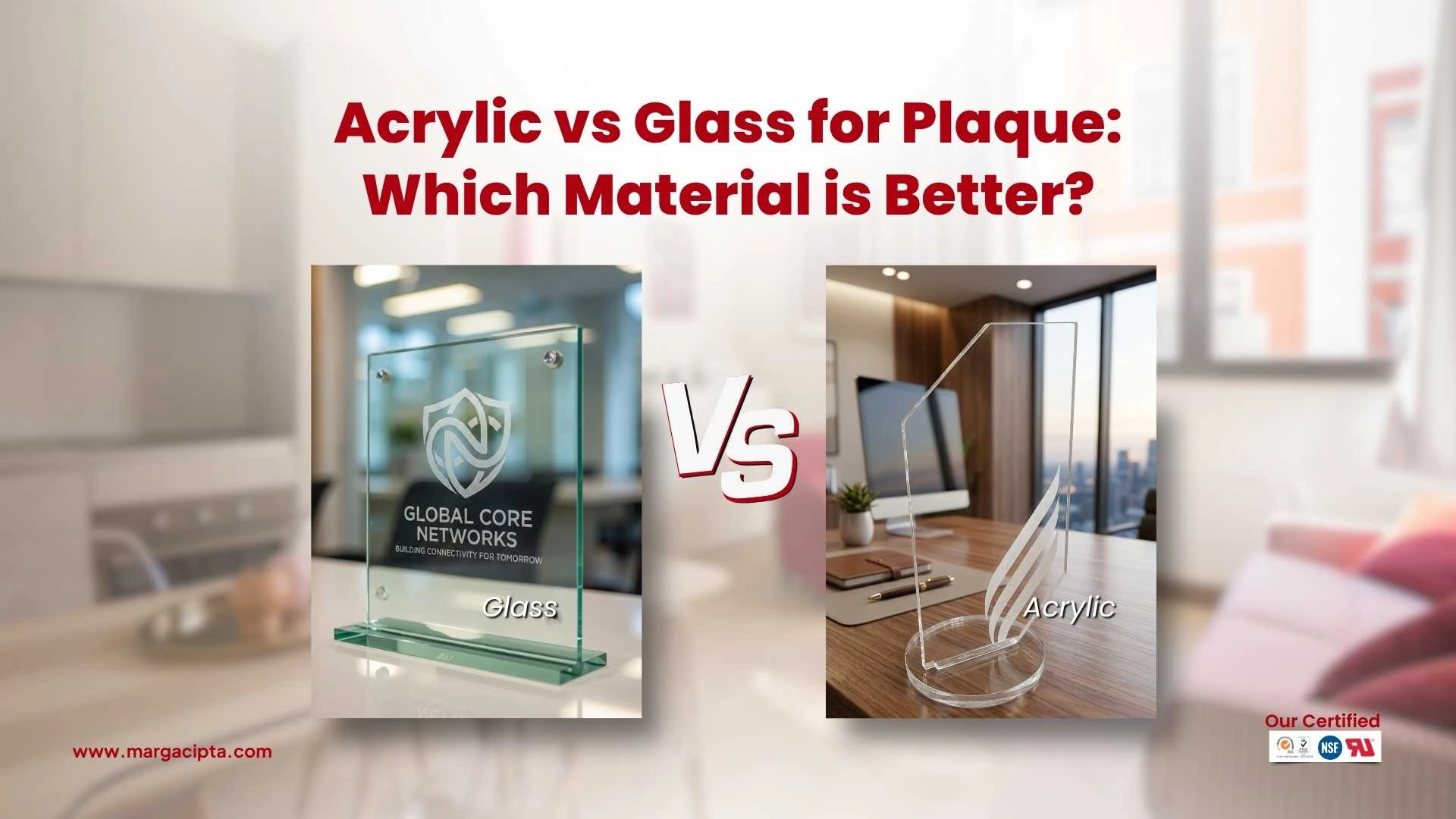
Acrylic vs Glass for Plaque: Which Material is Better?

Informational

Acrylic is generally better than glass for plaque applications.

It offers higher impact resistance, lighter weight, and easier fabrication while still maintaining a clear, premium appearance.

For most commercial and design purposes, acrylic provides a more practical and efficient solution.

Quick Comparison: Acrylic vs Glass

Feature

Acrylic

Glass

Impact Resistance

High (does not shatter easily)

Low (breakable)

Weight

Lightweight

Heavy

Clarity

Excellent

Excellent

Fabrication

Easy

Limited

Cost

More efficient

Higher overall cost

Durability and Safety

Acrylic is significantly more impact-resistant than glass. It does not shatter easily, making it safer for use in offices, public spaces, and high-traffic environments.

Glass, while visually appealing, is fragile and prone to breaking. This can lead to safety risks and higher replacement costs.

Read also: How to Choose UV Resistant Acrylic Sheets for Outdoor Applications

Visual Appearance

Both materials offer a clean and transparent look, but acrylic has a more consistent and modern finish.

Acrylic sheets also provide better results for:

  • UV printing
  • Laser engraving
  • Custom designs

Glass may have a slight tint depending on its composition, while acrylic maintains clearer visual consistency.

Weight and Installation

Acrylic is much lighter than glass, making it easier to handle, transport, and install.

This is especially important for:

  • Large plaques
  • Wall-mounted signage
  • Bulk production

Glass requires more careful handling and stronger support systems due to its weight.

Fabrication and Flexibility

Acrylic is highly versatile and compatible with modern production techniques.

It can be:

  • Cut precisely
  • Engraved easily
  • Printed directly

Glass, on the other hand, requires specialized tools and has limited flexibility for customization.

Cost Efficiency

Acrylic is generally more cost-effective than glass when considering:

  • Material cost
  • Fabrication process
  • Transportation and installation

Its durability also reduces the risk of damage, making it a more reliable long-term investment.

Read also: What Acrylic to Use for Cake Topper: A Complete Material Guide

Why Acrylic is the Preferred Material

For most plaque applications, acrylic offers the best balance between:

  • Durability
  • Aesthetics
  • Practicality

This is why many businesses and manufacturers choose acrylic sheets as their primary material.

Marga Cipta provides high-quality acrylic sheets that are suitable for various fabrication methods, helping ensure consistent and professional results.

Conclusion

In the comparison of acrylic vs glass for plaque, acrylic stands out as the better overall material.

It combines strength, clarity, and flexibility, making it ideal for modern plaque production. For businesses looking for efficiency and reliability, acrylic is the smarter choice.

News Release

Clear Acrylic Sheet vs Glass: Pros, Cons & Key Differences

Clear acrylic sheet and glass may look similar, but they have significant differences in strength, weight, safety, and flexibility.

In general, clear acrylic sheet is lighter, more impact-resistant, and easier to fabricate, while glass is more scratch-resistant and traditionally used for windows.

Because of these advantages, acrylic sheets are widely used for signage, display cases, partitions, and architectural panels.


Key Differences Between Acrylic Sheet and Glass

Feature

Clear Acrylic Sheet

Glass

Weight

About 50% lighter

Heavier

Impact resistance

Up to 10–17× stronger

Can shatter easily

Transparency

Up to 92% light transmission

Around 90%

Fabrication

Easy to cut, bend, and shape

Difficult to modify

Safety

Shatter-resistant

Breaks into sharp pieces

Scratch resistance

Lower than glass

Higher

These properties make acrylic a popular alternative for many modern applications.

Read also: Cost Breakdown: How Acrylic Can Help You Save Budget in Long-Term Projects

Pros of Clear Acrylic Sheet

Clear acrylic sheets offer several advantages compared to glass.

1. Much More Impact Resistant

Acrylic is significantly stronger against impact, making it safer for environments where breakage is a concern.

2. Lightweight

Acrylic weighs roughly half as much as glass, making installation easier and reducing structural load.

3. Easy to Fabricate

Acrylic can be:

  • Laser cut
  • CNC machined
  • Heat bent
  • Thermoformed

This flexibility makes it ideal for custom designs.

4. Excellent Optical Clarity

High-quality acrylic can achieve up to 92% light transmission, making it one of the clearest plastic materials available.

Cons of Clear Acrylic Sheet

Despite its advantages, acrylic also has limitations.

1. More Prone to Scratches

Compared to glass, acrylic surfaces can scratch more easily.

2. Higher Thermal Expansion

Acrylic expands more when exposed to temperature changes.

3. Chemical Sensitivity

Certain solvents can damage acrylic surfaces.

When to Choose Acrylic Instead of Glass

Acrylic sheets are better when you need:

  • Lightweight panels
  • High impact resistance
  • Custom shapes or fabrication
  • Safer materials for public environments

Common applications include:

  • Retail signage
  • LED light boxes
  • Display stands
  • Protective barriers
  • Architectural panels

Read also: Acrylic for Industrial Use: From Machine Guards to Safety Barriers

FAQ: Clear Acrylic Sheet vs Glass

Is acrylic stronger than glass?

Yes. Acrylic is significantly more impact resistant than glass and less likely to shatter.

Is acrylic clearer than glass?

High-quality acrylic can transmit slightly more light than glass, making it very clear.

Does acrylic scratch easily?

Yes, acrylic is more prone to scratches compared to glass.

Can acrylic replace glass?

In many applications such as signage, displays, and partitions, acrylic can effectively replace glass.

Looking for High-Quality Clear Acrylic Sheets?

If you need a material that is lighter, safer, and easier to fabricate than glass, clear acrylic sheets are a reliable alternative for many applications such as signage, displays, partitions, and architectural panels.

PT. Margacipta Wirasentosa supplies high-quality acrylic sheets with excellent optical clarity and consistent thickness, suitable for both commercial and industrial use.

  • High transparency
  • Durable and impact resistant
  • Easy to cut, shape, and fabricate
  • Suitable for signage, displays, and protective panels

Contact our team at info@margacipta.com or explore our acrylic sheet products to find the right material for your project.

Acrylic Cleaner Guide: Safe Liquids to Clean Acrylic Without Damage

The best acrylic cleaner is a mild, non-abrasive liquid that cleans the surface without causing scratches, cloudiness, or chemical damage.

Using the wrong cleaner can permanently affect the appearance of acrylic sheets, especially clear acrylic surfaces.

To maintain clarity and durability, it is important to use safe cleaning solutions specifically suited for acrylic materials.

Why Acrylic Requires Special Cleaning

Acrylic sheets are durable and visually appealing, but their surface is more sensitive than glass. Using harsh chemicals or rough cleaning tools may cause:

  • Fine scratches
  • Cloudy appearance
  • Surface damage
  • Reduced clarity over time

Proper cleaning helps preserve the smooth finish and extends the lifespan of the material.

Read also: Why Cast Acrylic Is Better Than Glass: Benefits You Should Know

Best Liquids to Clean Acrylic

1. Mild Soap and Water

A mixture of mild liquid soap and clean water is one of the safest options for acrylic cleaning.

Benefits:

  • Gentle on the surface
  • Easy to use
  • Suitable for regular maintenance

Use a soft microfiber cloth to wipe the acrylic gently.

2. Specialized Acrylic Cleaner

Acrylic-specific cleaners are designed to remove dust, fingerprints, and dirt without damaging the material.

These cleaners help:

  • Reduce static buildup
  • Maintain clarity
  • Minimize streaks

They are recommended for displays, signage, and premium acrylic applications

3. Distilled Water

For light dust and minor cleaning, distilled water can be used safely. It helps prevent mineral spots and streaks that may occur with regular tap water.

Cleaning Tools to Use

When cleaning acrylic, always use:

  • Soft microfiber cloths
  • Non-abrasive wipes
  • Gentle wiping motions

Avoid:

  • Paper towels
  • Rough fabrics
  • Scrubbing pads

These materials can create fine scratches on the surface.

Liquids to Avoid

Certain chemicals should never be used on acrylic sheets.

Avoid:

  • Ammonia-based cleaners
  • Alcohol-based liquids
  • Glass cleaners
  • Strong solvents

These substances can cause acrylic to become cloudy, brittle, or cracked over time.

Proper Cleaning Technique

For best results:

  1. Remove loose dust first
  2. Apply cleaner gently
  3. Wipe in straight motions
  4. Dry using a clean microfiber cloth

Avoid circular scrubbing, as it may create visible swirl marks.

Read also: What Is Cast Acrylic Used For? A Closer Look

Why Acrylic Quality Also Matters

High-quality acrylic sheets generally offer:

  • Better surface consistency
  • Improved resistance to minor scratches
  • Longer-lasting clarity

Using premium acrylic materials helps maintain appearance even with frequent cleaning.

Marga Cipta supplies high-quality acrylic sheets suitable for displays, signage, fabrication, and decorative applications.

Conclusion

Choosing the right acrylic cleaner is essential to maintaining the clarity and durability of acrylic sheets.

Safe cleaning liquids such as mild soap solutions and specialized acrylic cleaners help prevent scratches and damage. Combined with proper cleaning techniques and high-quality materials, acrylic surfaces can remain clear and visually appealing for a long time.

Ready to explore our cast acrylic options? At Margacipta Wirasentosa, we offer high-quality clear cast acrylic sheets from 100% virgin MMA in various thicknesses and custom sizes to fit your needs.

Reach out to our Instagram or download our Product Catalog for more information.

Acrylic for Industrial Use: From Machine Guards to Safety Barriers | MC® Cast Acrylic

In modern industrial environments, safety, efficiency, and durability are top priorities. As factories and facilities continue to upgrade their operations in 2026, the demand for reliable materials has increased, especially for applications requiring strength, visibility, and long-term cost efficiency.

One material that stands out is acrylic for industrial use, offering superior clarity, impressive durability, and adaptability across various sectors.

MC® Cast Acrylic Sheet by Marga Cipta provides industry-grade performance suitable for manufacturing, warehousing, food processing, automotive, and many other industrial applications.

1. Clear Visibility for Machine Guards and Safety Shields

Industrial machines often involve fast-moving parts that require proper guarding without compromising visibility.

Acrylic sheet is widely used for machine guards, equipment shields, and protective covers due to its excellent optical clarity and high impact resistance.

Key advantages include:

  • Crystal-clear visibility for operators
  • Safer monitoring of machine operations
  • Stronger impact resistance than glass
  • Lightweight design that reduces mechanical load

Machine guards made from acrylic help reduce workplace accidents while maintaining efficient workflow.

Read also: Acrylic Application for Accessories: Stylish, Durable, and Versatile

2. Durable and Lightweight Safety Barriers

Many factories and warehouses use safety barriers to separate work zones, protect workers, and guide traffic. Acrylic barriers are an ideal solution because they are:

  • Durable and long-lasting
  • Resistant to cracking
  • Easy to install and relocate
  • Suitable for indoor and semi-outdoor environments

They maintain a professional, clean appearance while providing essential physical protection. From forklift lanes to assembly lines, acrylic safety barriers help create structured and safe workplaces.

3. Enclosures and Covers for Sensitive Equipment

Acrylic for industrial use is also favored for equipment enclosures that need to be both protective and visually accessible. Common applications include:

  • Electrical panel covers
  • Dust protection enclosures
  • Laboratory instrument housing
  • Chemical processing equipment covers

Since acrylic is non-conductive and resistant to corrosion, it is an excellent material for environments requiring stable, protective enclosures.

4. Acrylic in Clean Rooms and Food Processing

Industries such as pharmaceuticals, medical manufacturing, and food processing require materials that support cleanliness and hygiene. Acrylic surfaces are:

  • Easy to clean and sanitize
  • Resistant to chemicals and moisture
  • Non-porous and hygienic

These properties make acrylic suitable for partition walls, inspection windows, and protective shields in controlled environments.

Read also: Acrylic Sheet for Interior Design: Modern Applications for 2026

5. Cost-Efficient Alternative to Glass

Compared to tempered or laminated glass, acrylic offers several economic benefits:

  • Lower weight reduces installation and transportation costs
  • Higher durability decreases replacement frequency
  • Safer breakage characteristics reduce workplace hazards

This makes acrylic a practical long-term investment for industrial facilities aiming to optimize operational costs without sacrificing quality or safety.

Conclusion

From machine guards to safety barriers and equipment enclosures, acrylic for industrial use provides a strong, versatile, and efficient solution for modern industrial environments.

Its clarity, impact resistance, lightweight structure, and cost-efficiency make it one of the most reliable materials for today's facilities.

MC® Cast Acrylic Sheet by Marga Cipta continues to support industries with consistent quality and performance, helping businesses operate safely, efficiently, and sustainably.

Want to order? E-mail us at info@margacipta.com and get more information about our acrylic products.

Acrylic Usage Trends 2026: New Applications in Design and Industry

Acrylic continues to gain momentum as one of the most versatile materials across design, construction, and manufacturing industries. Known for being lightweight, strong, highly transparent, and easy to fabricate, acrylic is increasingly replacing traditional materials such as glass and metal.

As we move into 2026, acrylic is no longer limited to signage or displays. Its applications are expanding rapidly, opening new opportunities for businesses, designers, architects, and manufacturers. Below are the key acrylic usage trends predicted to shape design and industry in 2026.

Trend 1: Acrylic Interior Panels

One of the strongest acrylic usage trends in 2026 is the rise of acrylic interior panels for both commercial and residential buildings.

Why this trend is growing:

The rapid development of offices, retail spaces, hotels, and modern housing has increased demand for materials that are visually appealing, durable, and cost-efficient. Acrylic interior panels offer high clarity and a sleek, minimalistic look, making them ideal for partitions, wall panels, and decorative elements.

Compared to glass, acrylic is more affordable, lighter, and easier to install. Designers and architects also favor acrylic for its flexibility in color, thickness, and finish, allowing them to create modern interior concepts without compromising safety or aesthetics.

Read also: 100% Virgin MMA: The Key to High-Quality Acrylic Sheets

Trend 2: LED Signage and Display Systems

LED signage remains one of the most dominant acrylic applications heading into 2026.

Why this trend continues to rise:

Offline retail transformation is still strong, particularly in developing markets where physical stores continue to evolve. Many small and medium-sized businesses are renovating storefronts and upgrading visual branding, increasing demand for LED signage and display systems.

Acrylic is the preferred material for LED signage due to its excellent light transmission, smooth surface, and ability to diffuse light evenly. From illuminated logos and lightboxes to promotional displays, acrylic helps businesses create brighter, more attractive visual communication.

Trend 3: Acrylic Greenhouse Panels

Sustainability and food security are driving the growth of urban farming, hydroponics, and smart agriculture—making acrylic greenhouse panels a key trend in 2026.

Why this trend is emerging:

Acrylic offers superior UV resistance, high transparency, and better impact strength compared to glass. These properties make it ideal for greenhouse roofs and walls, where consistent light transmission and durability are essential.

As urban farming expands into rooftops, compact land areas, and controlled environments, acrylic greenhouse panels provide a long-lasting, lightweight solution that supports plant growth while reducing maintenance costs.

Read also: Food Grade Acrylic: Safe Choice for Your F&B Business

Trend 4: Furniture, Home Décor, and Small Products

Acrylic furniture and decorative items are gaining popularity, influenced heavily by social media-driven interior trends.

Why this trend is accelerating:

Clean, modern, and minimalist interiors are in high demand, and acrylic fits perfectly into this aesthetic. Furniture such as acrylic chairs, tables, shelves, and decorative panels offers a contemporary look without making spaces feel heavy.

In addition, e-commerce sellers increasingly use acrylic for DIY products and small household items. Consumers prefer materials that are lightweight, modern, durable, and visually appealing—qualities that acrylic delivers consistently.

Acrylic: A Material with Expanding Relevance

The versatility of acrylic makes it increasingly relevant across industries beyond traditional applications. From architecture and retail to agriculture and lifestyle products, acrylic continues to adapt to changing market needs.

To support these growing demands, choosing a high-quality material is essential. MC® Cast Acrylic Sheet is a proven solution, offering consistent clarity, strength, and fabrication performance for both design and industrial applications.

Conclusion

Acrylic usage trends in 2026 highlight a clear shift toward materials that combine aesthetics, durability, and flexibility. Interior panels, LED signage, greenhouse systems, and furniture are just a few examples of how acrylic is shaping the future of design and industry.

By leveraging reliable materials like MC® Cast Acrylic Sheet, businesses can stay ahead of trends and unlock new opportunities in an evolving market.